Kayaking the Arctic
 On my last day in Longyearbyen, in the Arctic, I wanted to kayak. In a kayak you sit close to the water, and I hoped to feel more inside of this landscape that we had been floating through on a sailboat for the past two weeks. But also, at home in the Hudson Valley I kayak every day, so to be in a little boat on the water for me is to feel home.
In 1896 Nansen with his traveling companion Johansen end their three year expedition in the Arctic crossing open water in kayaks made of skins stretched over a wooden frame. The kayaks were boxy and stable and could carry a large load. At one point, walrus surround their boats, and a walrus “shot up beside [Nansen], threw itself onto the edge of the kayak, took hold farther over the deck with one fore-flipper and, as it tried to upset [him], aimed a blow at the kayak with its tusks.” At another point, a walrus punches a hole through his boat.
Pyramiden
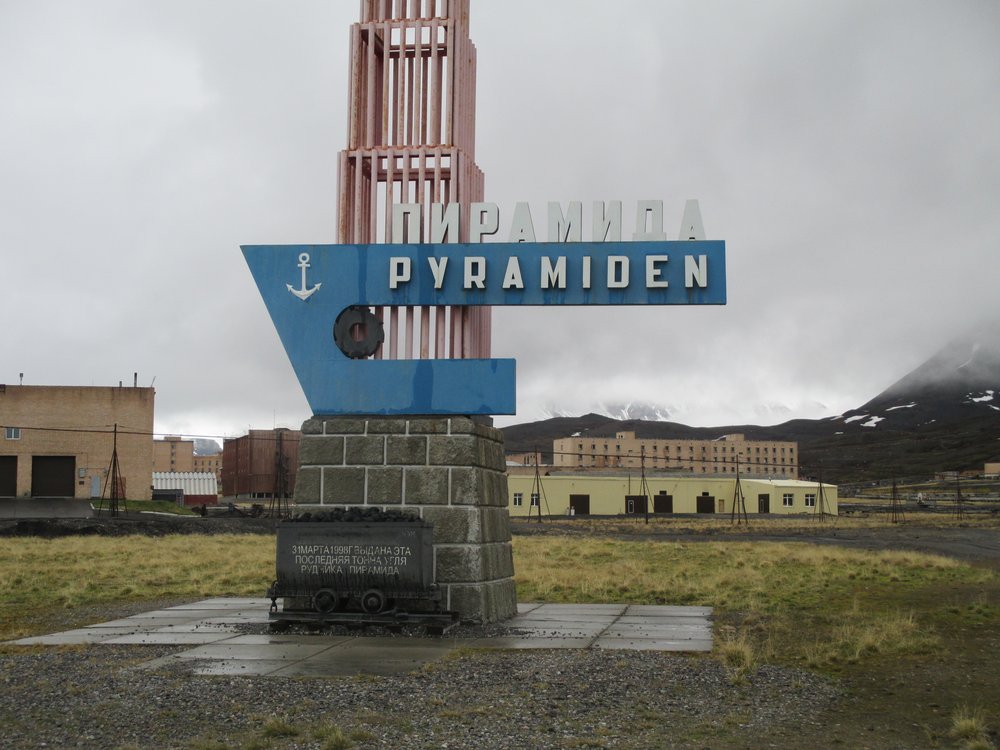 The Antigua docked at Pyramiden in the evening and Sascha, the guide to Pyramiden came on board. He was slender, mid-thirties, with shoulder length black hair that needed a wash. He gave a brief history of the town, without cracking a smile.
Pyramiden is a Russian ghost town of the north. It was founded by the Swedes to mine coal from the pyramidal shaped mountain in 1910. In 1927 they sold it to the Soviet Union. The town, on the Billefjorden, was officially closed in 1998 but about 20 people continue to live there, running a small tourist business.
When Sascha was done talking, someone offered him a drink.
“I don’t drink,” he said in a strong Russian accent. “I smoke weeeeeed.” We all laughed. Sascha continued with his deadpan look, eyes wide.
Fishing and Hunting the Arctic
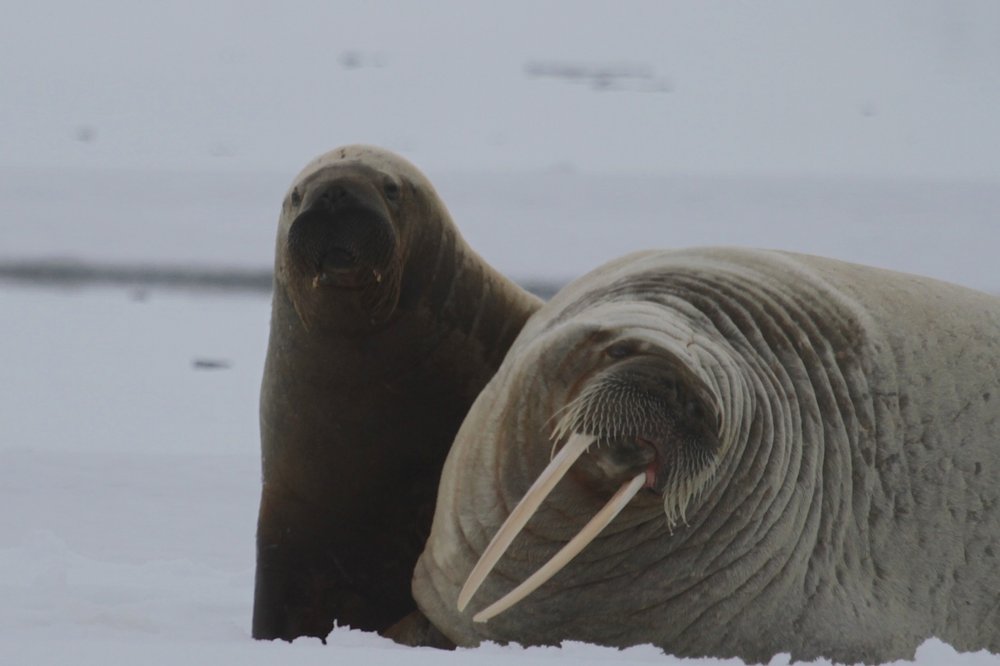 Walrus, protected since 1952Reading polar literature for someone who loves the natural world is a challenge. Every journey involves a fair amount of brutality, of killing. On most expeditions the dogs are at once loved and needed but also overworked, often killed, sometimes eaten. That was the case with Amundsen heading to the South Pole. He feeds the dogs to the remaining dogs, but he also eats them: “we have now had three splendid dinners out of our good Greenland dogs,” writes one of his shipmates. Yet Amundsen loved his dogs (at times it seems more than the men) and in writing about them is at his most philosophical. Killing the dogs is a horror: “It is my only dark memory from down there, that my lovely animals were destroyed.” The treatment of the dogs is also something that Nansen feels keenly “It was undeniable cruelty to the poor animals from first to last, and one must often look back on it with horror. It is the sad part of expeditions of this kind that one systematically kills all better feelings, until only hard-hearted egoism remains.”
Arctic Silence
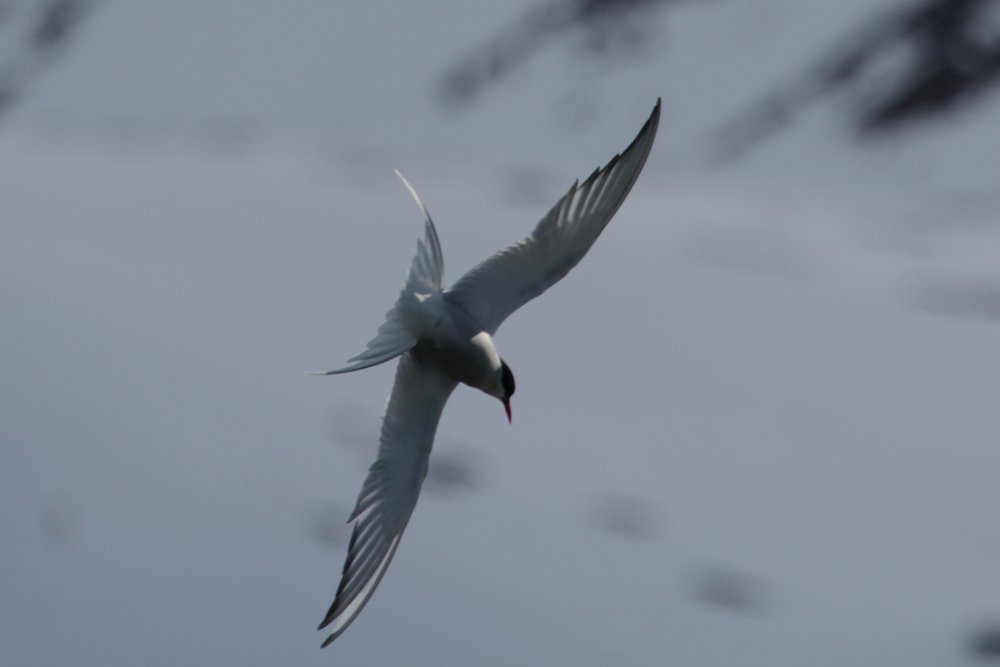 Arctic TernWhat I missed most while on the ship Antigua was not fresh food or a comfortable bed. What I missed was silence. Music played over the boat speakers in the main room. Someone was always talking, laughing, wondering about what day of the week it was, what was next or what was for dinner. The galley looked like a Starbucks on a Saturday afternoon: dozens of open computers, everyone at work writing or managing photos or sound or videos. There was the hum of creative busyness that seemed to stretch long into the endless light.
I had been anticipating, even looking forward to the Arctic silence. In my life at home, I equate silence with peace. With steadiness. But I knew that silence could be varying, unpredictable. When I travelled to the Antarctic in 2005, I felt ambushed by the silence. It stretched the length of the Ross Ice Shelf, and swallowed me (my essay, “The Secret of Silence” is about this Antarctic experience). I wanted to compare the silences of this world, the tame silence of home and the untamed silences of north and south.